
As we continue the study of triangles, we have come to a point where, as mentioned in the previous post, we can derive formulas for distances between the various centers of the triangle. We can also study the regular n-sided polygon in depth. So, let us proceed.
Distance between Circumcenter and Orthocenter
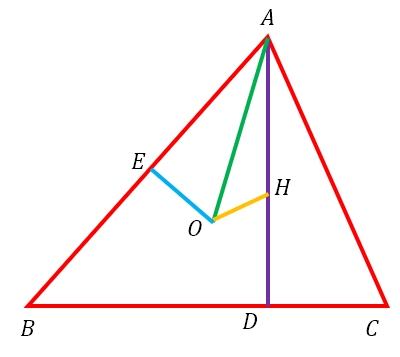
With reference to the figure above, O and H are the circumcenter and orthocenter respectively of ΔABC.
AD is the altitude from A to BC. E is the foot of the perpendicular from O to AB.
In ΔADC, ∠CAD = 90° – C
In ΔOEA, ∠AOE = C ⇒ ∠EAO = 90° – C
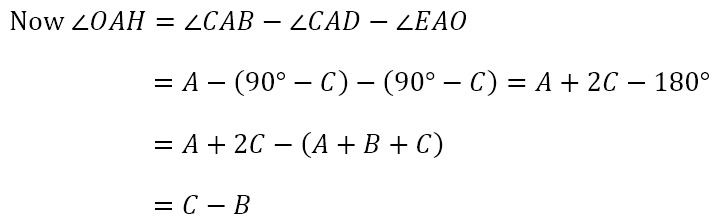
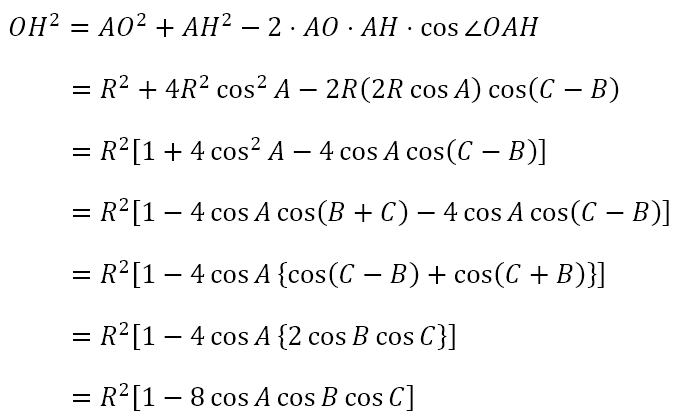
In ΔAOH, AO = R, AH = 2R cosA, ∠OAH = C – B
Using the cosine rule on ΔOAH we get

Distance between Circumcenter and Incenter
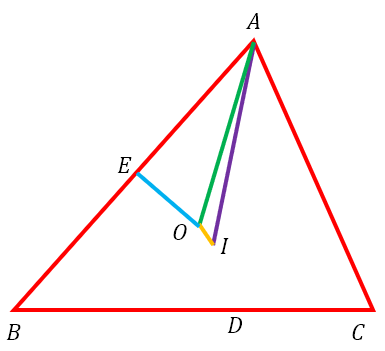
With reference to the figure above, O and I are the circumcenter and incenter respectively of ΔABC.
E is the foot of the perpendicular from O to AB.
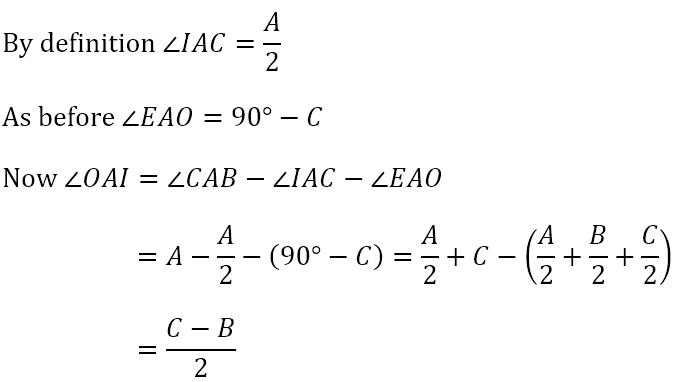

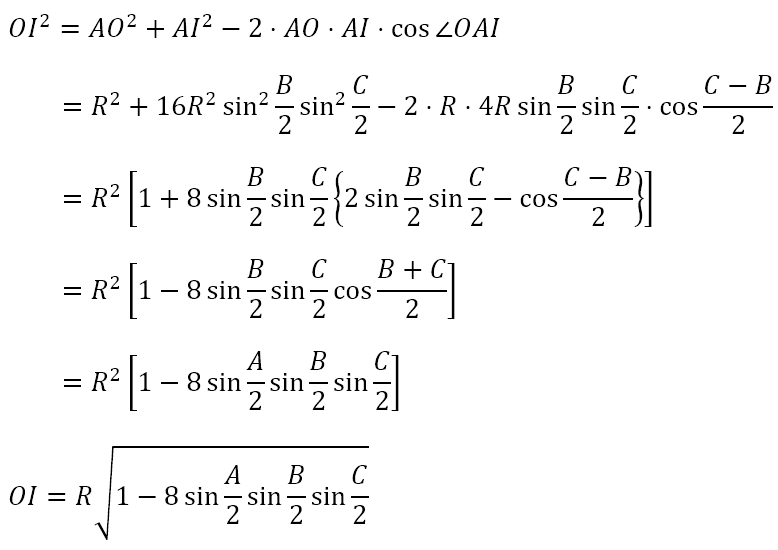
Using the cosine rule in ΔOAI we get
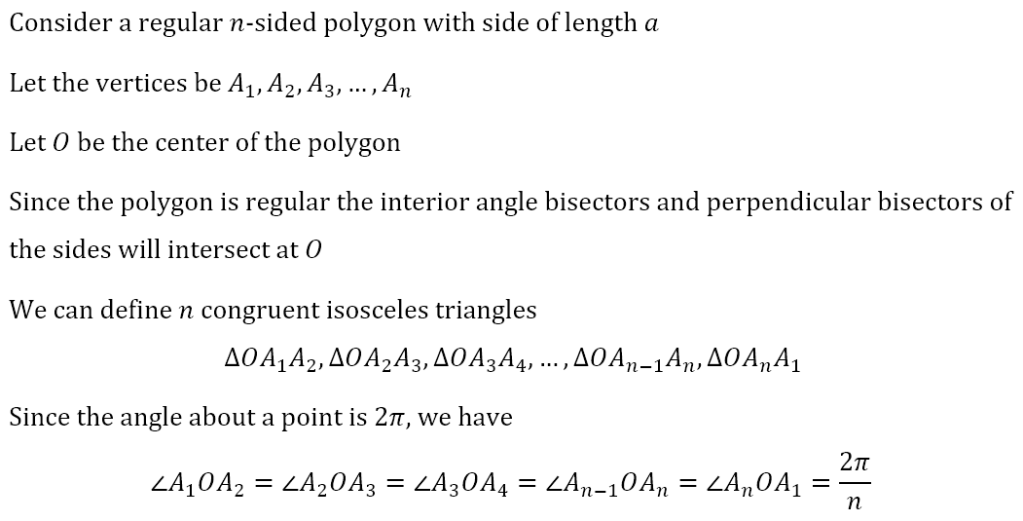
Regular n-sided Polygon
Regular n-sided Polygon – One Constitutive Triangle
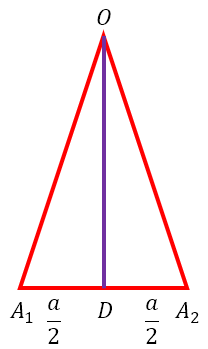
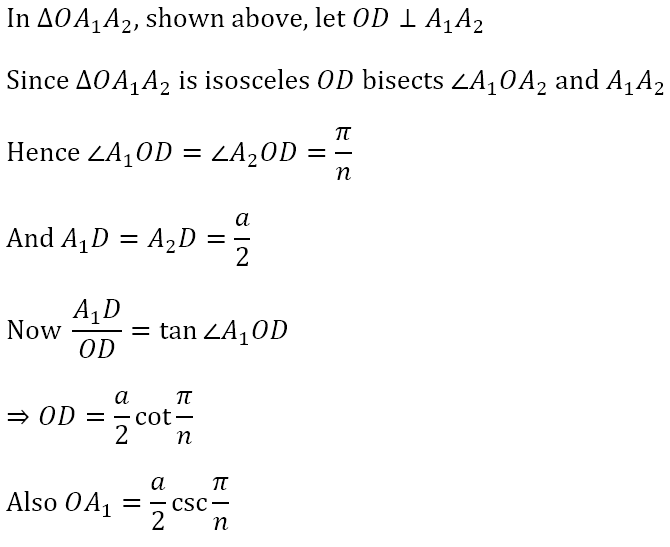
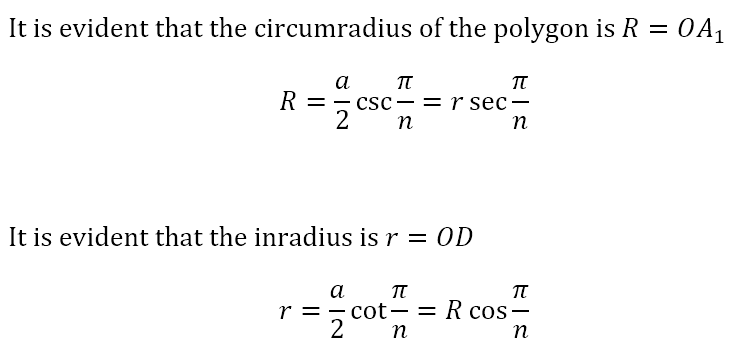
Regular Polygon – Circumradius and Inradius Given the Side
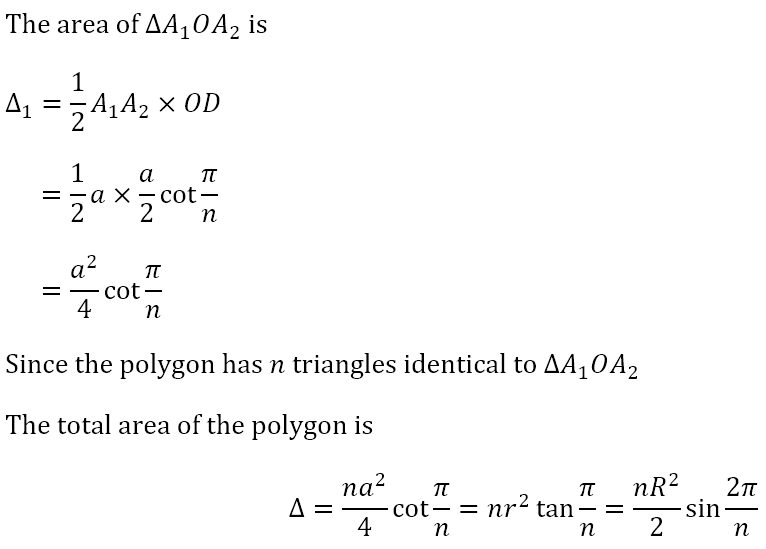
Regular Polygon – Area
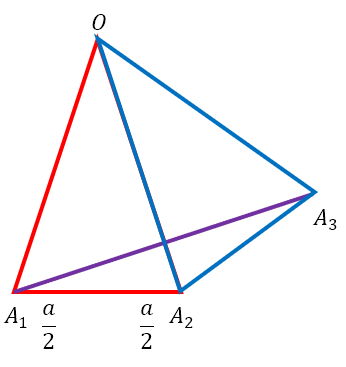
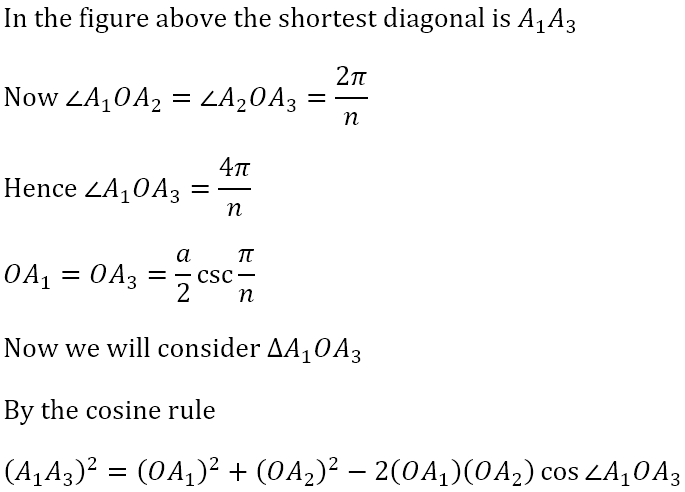
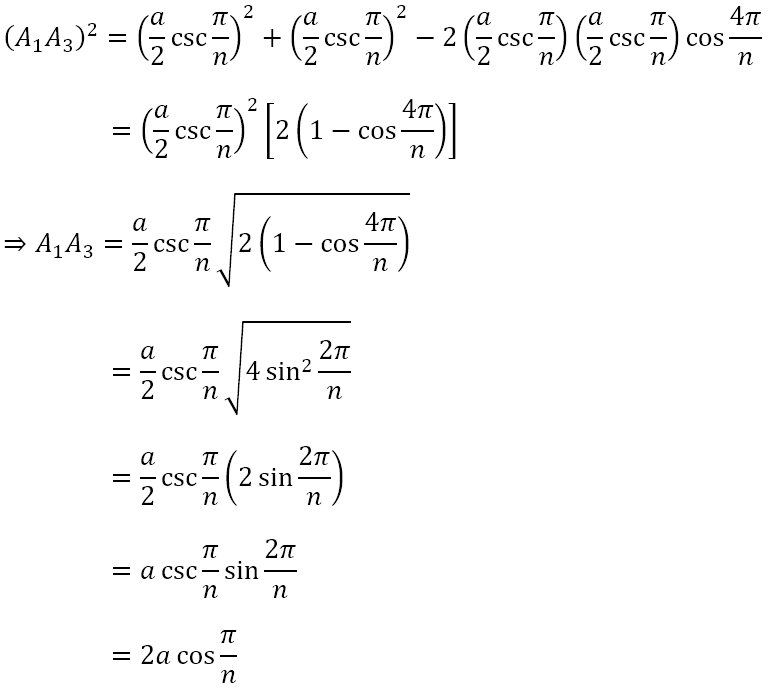
Regular Polygon – Shortest Diagonal
The shortest diagonal of the polygon is found by taking two adjacent triangles and finding the distance between the two vertices not common to the triangles.
In the next post we will begin using many of the formulas derived so far in what is known as the solution of triangles. Stay tuned.


Leave a Reply